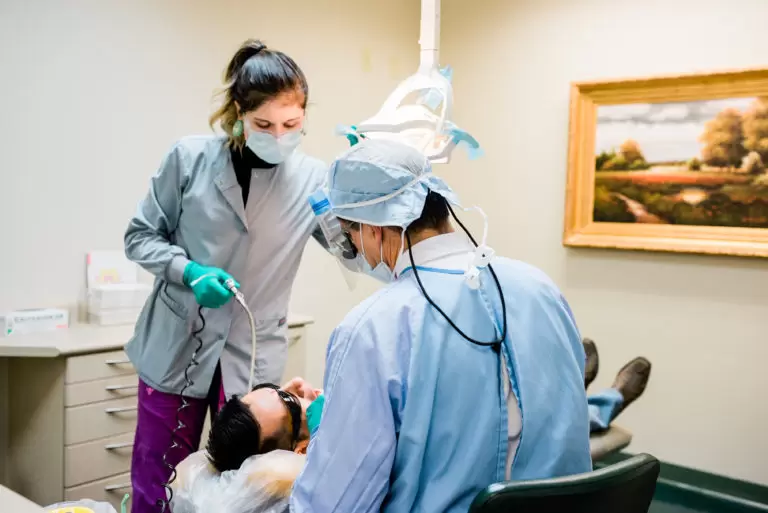
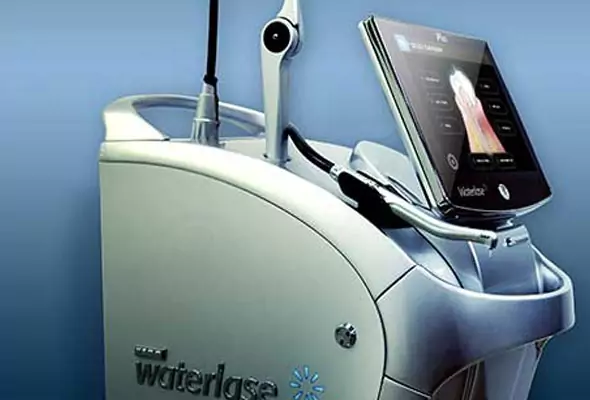
Our incorporation of Waterlase Laser technology is improving the already-superb patient comfort, care, and treatment that we provide our patients at North Raleigh Periodontics. While Waterlase can be used for a variety of treatments, from deep cleaning to the prevention of gum recession, Waterlase is especially effective when utilized to treat peri-implant mucositis and peri-implantitis.
Serving the greater Triangle area – Raleigh, Cary, Apex, and Wake Forest.
North Raleigh Periodontics is ecstatic to have incorporated laser therapy into our patient treatment! We utilize a type of laser called a Waterlase to precisely, quietly, and painlessly treat a variety of periodontal issues. The laser is especially beneficial in treating periodontal disease through minimally invasive protocols to remove plaque and calculus under and around the gum line.
Laurie is the talented in-house graphic designer here at North Raleigh Periodontics. When asked what she enjoys about graphic design, she explains that it is “a creative outlet— I get to meld my interests in design and computers to create visually interesting projects.”
Originally from Woodbridge, Virginia, Laurie attended East Carolina University’s School of Art and Design. She then moved to the City of Oaks in 1992, where she has lived ever since with her husband and two sons. When she is not at North Raleigh Periodontics, you’ll find her spending time with her family, at church, or taking part in fitness classes. Watch her interview here!
Merry Christmas and season’s greetings from North Raleigh Periodontics! We will be closed December 24-25 and New Year’s day. We hope you have a safe and happy holiday!
Stephanie grew up right here in Raleigh, North Carolina before heading off to Winston-Salem to attend high school at the University of North Carolina School of the Arts. At UNC School of the Arts, Stephanie studied ballet, dancing lead roles in ballet performances like the Nutcracker. Her favorite role to dance in the Nutcracker? “The Sugar Plum Fairy of course!”
Low glycemic food for a vegan health & fitness diet for diabetics with foods high in vitamins, minerals, anthocyanins, antioxidants, protein, smart carbs & omega 3 fatty acids. Below 55 on the GI index. Top view
Oxidative Stress in the Oral Tissue
When there are too many free radicals, or oxidants, in the body, the imbalance is called oxidative stress. In the oral cavity, oxidative stress is associated with infection or inflammation of the gums (gingivitis) and other soft tissues (periodontitis). Factors including alcohol consumption, exposure to nicotine, dental procedures, dental cements and composite fillings also lead to oxidative stress. And oxidative stress in the oral cavity can be a major contributor to systemic oxidative stress–which leads to chronic diseases, such as rheumatoid arthritis or vascular disease including heart attack or stroke.
If you’ve been told you have gum (periodontal) disease, you’re not alone. In fact, according to a recent finding from the Centers for Disease Control and Prevention, one out of every two Americans aged 30 and over has periodontal disease. If you are one of those susceptible to periodontal issues, do not despair. Dr. Singletary is here to help. In our office, one of the first things we ask our patients is, “Have you noticed bleeding, swelling, or bad taste?”
Here’s a more comprehensive checklist to evaluate your periodontal health:
• Do your gums bleed when you brush or floss?
• Are your gums red, swollen, puffy, or tender?
• Do your gums no longer hug your teeth tightly?
• Do you have bad breath that won’t seem to go away?
• Do your teeth feel loose?
• Is there a change in the way your teeth fit together when you bite?
• Is there a change in the way your partial dentures fit?
If any of these describe you, what should you do? The American Academy of Periodontology recommends that every patient receive an annual comprehensive periodontal evaluation. At that time, we assess your risk for gum disease and diagnose existing issues. We determine a treatment plan that gives solutions and options. Dr. Singletary works with people every day to help them save teeth and give them the best gum health possible. Our office is open five days a week to help patients improve their periodontal health.
Serving the greater Triangle area – Raleigh, Cary, Apex, and Wake Forest.
For more information on this topic, listen to the Gum Guru Podcast by clicking the link below:
Among other factors, a good mouthwash aids in optimal oral health. While your teeth make up only about 25% of the surfaces in your mouth, another 75% include gum tissue and cheek tissue, the roof of the mouth, the throat, and tongue. These surfaces are best cleaned with an antiseptic mouthwash. As we often say here at North Raleigh Periodontics, periodontal disease is caused by bacteria in the mouth. Antiseptic mouthwashes work to kill these bad bacteria, while promoting good bacteria.
Although many good mouthwash brands are available, Listerine is one of the only mouthwashes approved by the ADA (American Dental Association) and has stood the test of time by being on the market for over 100 years. Several varieties of Listerine are available, depending on the needs of patients.
Serving the greater Triangle area – Raleigh, Cary, Apex, and Wake Forest.
Today lasers are everywhere – from Star Wars Jedis to laser printers to laser tag. Our Biolase laser uses water and light to treat periodontal disease. Often referred to as gum disease, periodontal disease is an infection of the tissues that surround and support your teeth; it is a major cause of tooth and bone loss in adults. Nearly 70% of adults have gum disease, however because gum disease is usually painless, you may not be aware that you have it.
Periodontal disease is caused by plaque, the sticky film of bacteria (Biofilm) that is constantly forming on the teeth.
Some of the warning signs to look for:
Red, swollen gums that bleed easily
Consistent bad taste or bad breath
Shifting, loose, or separating teeth
Change in the way teeth fit together when you bite
At North Raleigh Periodontics, we recently implemented Air Flow Therapy into our repertoire of periodontal services provided to our patients at no additional charge. Air Flow Therapy is the natural solution to polishing the tooth surface both above and below the gums. Using a combination of water, air, and either glycine or erythritol powder (both naturally derived), the cell wall of the bacteria is destroyed, thus killing the bacteria cell. Whereas the older method of polishing teeth with prophy paste and a rubber cup simply removed bacteria from the crown of the tooth, Air Flow Therapy can remove the harmful bacteria that cause periodontal disease from both the crown of the tooth and the root surface.
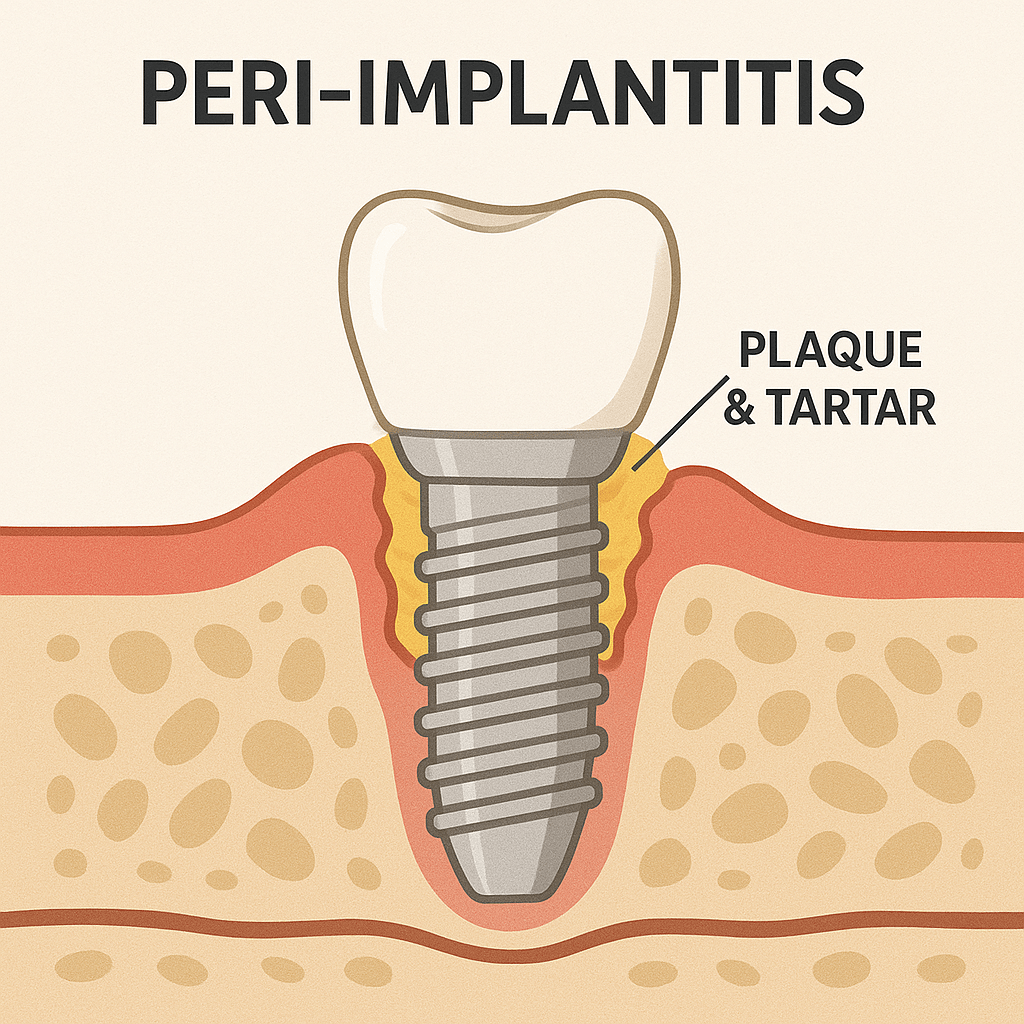
This is especially good news for our patients with dental implants. Dental implants function like normal teeth as they are integrated into the bone. These implants are coated with titanium, and bone heals around that titanium implant surface. However, when the titanium is manipulated or scratched by hygiene instruments, it can harm the surface of the implant, releasing titanium oxide and potentially causing a foreign body reaction or peri-implantitis. Foreign body reactions include swelling, bleeding, and pain around the implant surface, which could potentiate the loss of an implant.


 Laurie is the talented in-house graphic designer here at North Raleigh Periodontics. When asked what she enjoys about graphic design, she explains that it is “a creative outlet— I get to meld my interests in design and computers to create visually interesting projects.”


 Stephanie grew up right here in Raleigh, North Carolina before heading off to Winston-Salem to attend high school at the University of North Carolina School of the Arts. At UNC School of the Arts, Stephanie studied ballet, dancing lead roles in ballet performances like the Nutcracker. Her favorite role to dance in the Nutcracker? “The Sugar Plum Fairy of course!”


 If you’ve been told you have gum (periodontal) disease, you’re not alone. In fact, according to a recent finding from the Centers for Disease Control and Prevention, one out of every two Americans aged 30 and over has periodontal disease. If you are one of those susceptible to periodontal issues, do not despair. Dr. Singletary is here to help. In our office, one of the first things we ask our patients is, “Have you noticed bleeding, swelling, or bad taste?”