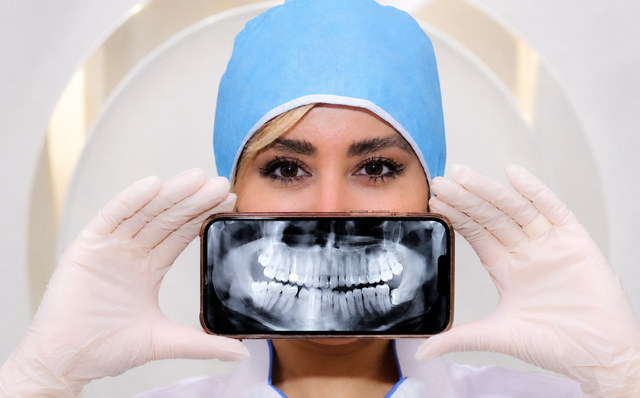
Your teeth can be losing the bone that supports them, and you may not feel a thing.
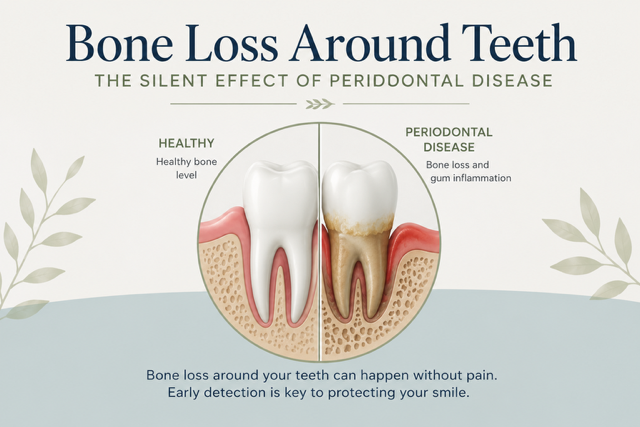
That’s one of the most surprising things about periodontal disease. Unlike a cavity that reaches the nerve or an injury that causes immediate pain, bone loss around teeth can develop quietly beneath the gumline.
Periodontitis is an inflammatory disease that can progressively damage the gums, periodontal ligament, and alveolar bone that supports your teeth. According to the American Dental Association, approximately 42% of dentate U.S. adults age 30 and older have some form of periodontitis.
So, what causes bone loss around teeth, and how can you protect your oral health?
1. Bone Loss Can Happen Without a Toothache
One of the biggest misconceptions about gum disease is that something must hurt if something is wrong. Unfortunately, pain is not a reliable early warning sign of periodontal disease.
A person can have:
– Bleeding gums
– Periodontal pockets
– Gum recession
– Bone loss
– Persistent bad breath
…and still experience little or no discomfort.
Periodontitis begins when bacteria in dental plaque trigger an inflammatory response. Over time, this inflammation can damage the tissues and bone that support your teeth.
Little-known fact: Not having pain does not necessarily mean the bone supporting your teeth is healthy.
2. Periodontal Disease Isn’t Just About Brushing and Flossing
Good oral hygiene is essential for preventing and managing gum disease, but periodontal health involves more than how well you brush and floss.
Factors that can contribute to periodontal disease and its progression include:
– Genetics
– Tobacco use
– Certain systemic health conditions
– Medications
– Stress
– Individual susceptibility to periodontal disease
This is one reason two people with similar oral hygiene habits can have very different periodontal health.
During a periodontal evaluation, your periodontist considers the whole picture, including gum measurements, bleeding, recession, tooth mobility, bone levels, medical history, and individual risk factors.
Little-known fact: Your risk for periodontal bone loss is influenced by much more than your toothbrush and floss.
3. Dental X-Rays Can Reveal Bone Loss You Can’t See
You can look closely at your teeth and gums in the mirror and still have no idea what is happening around the roots of your teeth.
That’s because some of the most important structures supporting your teeth are beneath the gumline.
Appropriate dental imaging can help your dental professional evaluate the amount and pattern of bone surrounding your teeth. When periodontal disease is suspected—or when you have a history of periodontal disease—imaging can provide valuable information that a visual examination alone cannot.
Not everyone needs the same X-rays at every appointment. Your dental professional will recommend imaging based on your individual clinical needs.
Little-known fact: Some bone loss around your teeth can only be detected by examining what is happening beneath the gumline.
4. Bone Loss Doesn’t Automatically Mean You’ll Lose Your Teeth
Hearing that you have bone loss around your teeth can understandably be frightening. But bone loss does not automatically mean that a tooth needs to be removed.
The goal of periodontal treatment is to control the disease, reduce harmful bacteria and calculus, establish healthier tissues around the teeth, and create an environment that can be maintained over time.
Depending on the severity and location of the disease, treatment may include:
– Improved at-home oral hygiene
– Professional periodontal therapy
– Scaling and root planing
– Periodontal surgery
– Site-specific treatments
– Regenerative periodontal procedures in selected cases
For certain types of periodontal bone defects, regenerative procedures may help encourage the body’s natural ability to rebuild some lost periodontal tissues. These procedures may involve materials such as membranes, bone grafts, or tissue-stimulating proteins.
However, not every type of bone loss can be regenerated, and not every patient is a candidate. An individualized periodontal evaluation is important for determining the best approach.
Little-known fact: Even when periodontal disease has caused bone loss, there may be treatment options designed to preserve natural teeth and, in selected cases, regenerate some lost supporting tissue.
5. Treating Periodontal Disease Is Only the Beginning
Successfully treating periodontal disease is an important step, but maintaining your results is just as important.
Periodontitis is a chronic disease, and people who have experienced it can have an increased risk of recurrence. Ongoing periodontal maintenance can help manage that risk and protect your teeth and supporting tissues.
Long-term periodontal health typically involves:
– Regular professional periodontal maintenance
– Consistent brushing and flossing
– Managing individual risk factors
– Monitoring changes in your gums and teeth
– Regular periodontal evaluations
Think of periodontal care as an ongoing investment in your oral health, not a one-time treatment.
Little-known fact: After experiencing periodontitis, maintaining your periodontal health is a lifelong process.
Don’t Wait for Your Teeth to Hurt
The most important thing to remember about bone loss and periodontal disease is simple: don’t use pain as your warning system.
If you experience:
– Bleeding when brushing or flossing
– Gum recession
– Persistent bad breath
– Loose or shifting teeth
– Changes in your bite
– A history of periodontal disease
…it’s worth having your gums and supporting bone evaluated.
And even if your mouth feels completely healthy, a comprehensive periodontal evaluation can provide valuable information about structures you can’t see or feel.
Protect the Bone Supporting Your Teeth
At North Raleigh Periodontics and Implant Center, Dr. Macon Singletary and our team are committed to helping patients understand what’s happening beneath the gumline and developing individualized treatment plans designed to preserve natural teeth, protect supporting bone, and maintain periodontal health.
Your teeth may feel fine today, but the bone supporting them deserves attention, too.
Have questions about bleeding gums, gum recession, periodontal disease, or bone loss around your teeth? Contact North Raleigh Periodontics and Implant Center to schedule a periodontal evaluation.
For more information, email us at [email protected]. Your smile deserves specialized care – let us help you achieve and maintain optimal gum health. Serving the greater Triangle area – Raleigh, Cary, Apex, Clayton, Rolesville, and Wake Forest.